
Est. 1994 · Chicago, Illinois

Every Piano
Deserves a
Listener.

A solo technician arrives with a tuning lever, a set of mutes, and thirty years of ear training — coaxing concert-grade pitch from neglected uprights and inherited grands alike.


Certifications & Manufacturer Authorizations

RPT

Registered Piano Technician

Piano Technicians Guild

SA

Authorized Service

Steinway & Sons

Certified Technician

Bösendorfer

YC

Yamaha Certified

Yamaha Corporation

MA

Master Artisan

American Institute of Piano

"The instrument remembers every room it has ever played in."

The Work

Four disciplines.
One pair of hands.

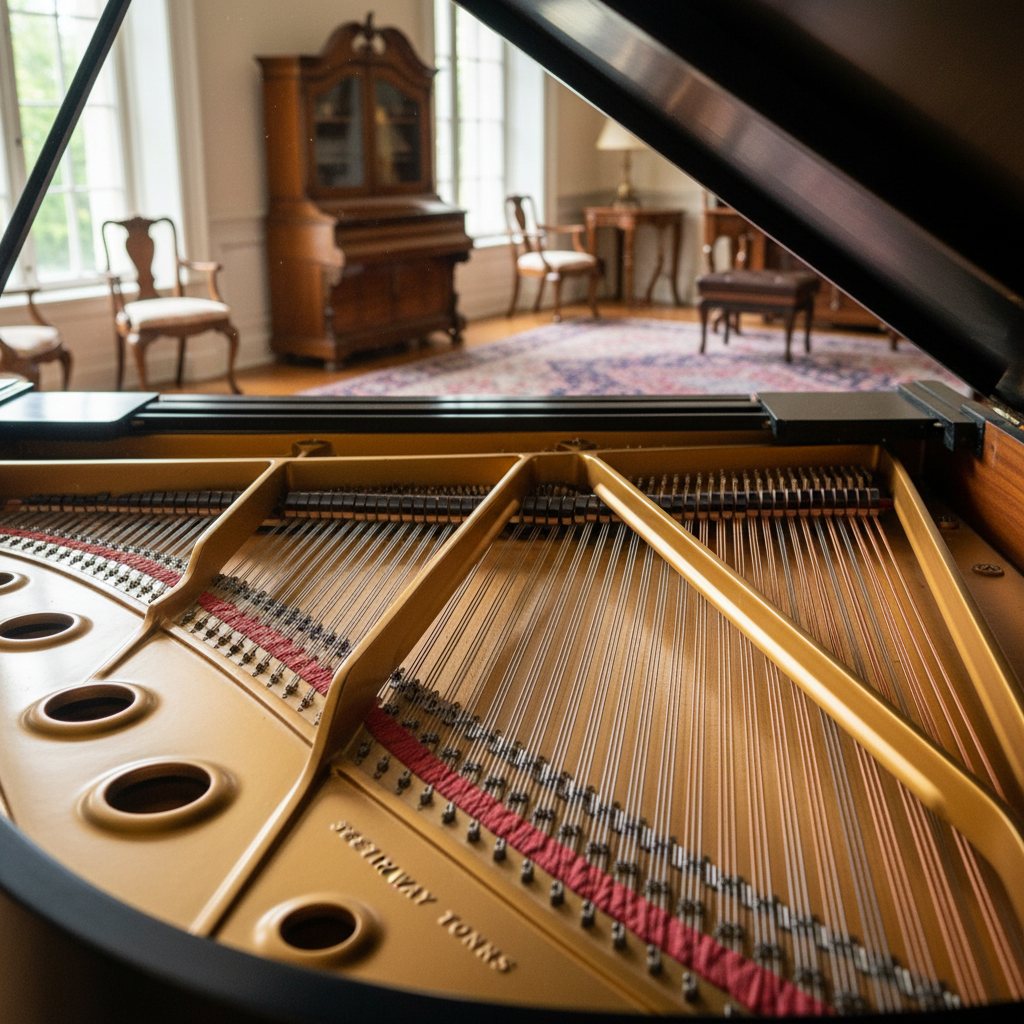
Close-up of piano strings and tuning pins inside a grand piano harp, warm brass tones
Service I

Pitch & Tuning

The Foundation of Every Chord

Your piano drifts. Not because it is failing — because it is alive, responding to humidity, season, and the weight of being played. When you sit down after months away and something feels wrong but you can't name it, that's drift. I set equal temperament by ear, beating fifths against a reference until each interval resolves into itself. A session takes ninety minutes. The difference is immediate.

"Ninety minutes. The difference is immediate."

Concert A440 pitch restoration · Electronic verification · Humidity assessment included
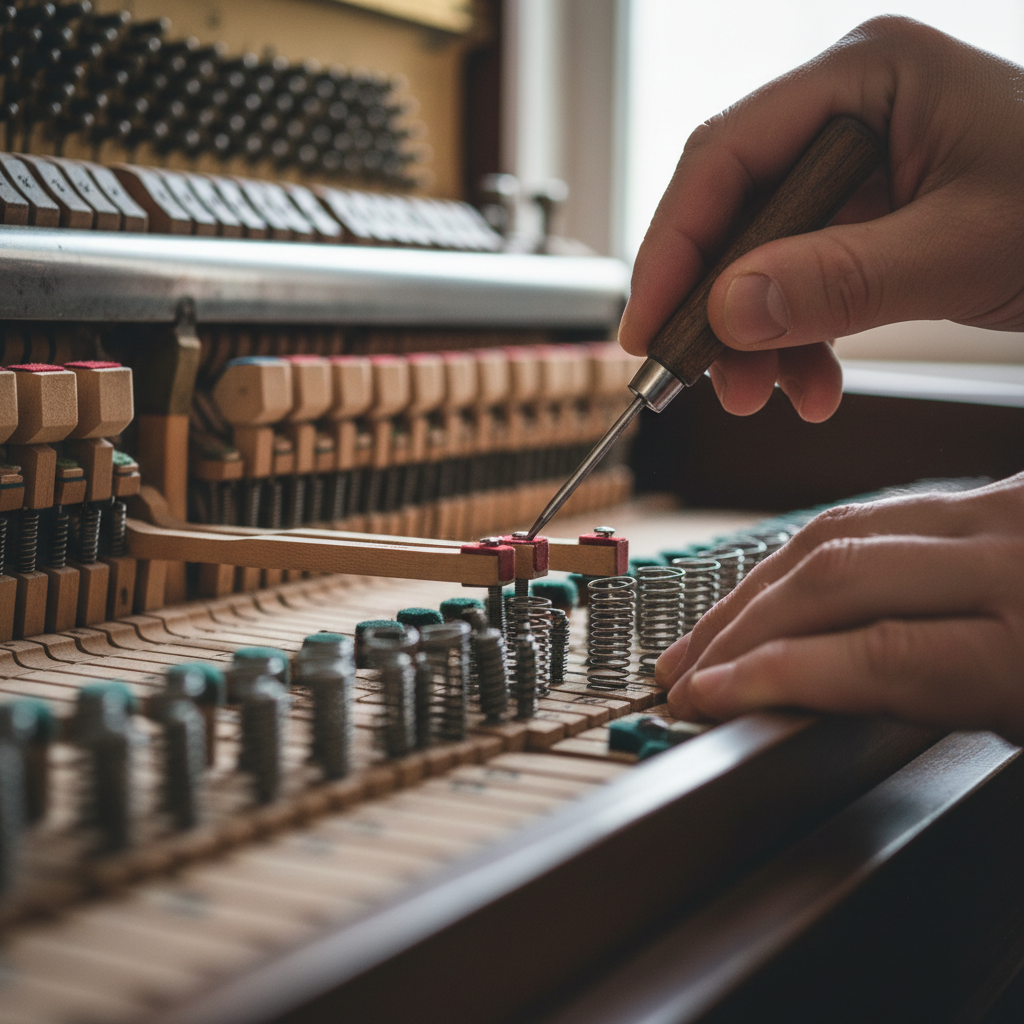
Piano technician hands adjusting regulation mechanism inside an upright piano, focused detail work
Service II

Regulation

The Mechanics of Intention

Between your finger and the string sit eighty-eight separate mechanisms, each one adjustable to within a fraction of a millimeter. When a key feels sluggish, or the repetition is slow, or the touch is uneven from bass to treble — that is regulation work. I adjust let-off, drop, back-check, and hammer travel until the action responds exactly as your technique demands. For piano teachers, this is the difference between a student who fights the instrument and one who plays it.

"The difference between a student who fights the instrument and one who plays it."

Full action regulation · Let-off & drop adjustment · Touch weight calibration

Voicing needles arranged on a workbench beside piano hammers, craftsman tools in soft light
Service III

Voicing

What the Room Hears

Tone is not fixed. A hammer that has grown hard will produce a bright, glassy sound even in a room that should be warm. A hammer that is too soft will sound dull in a concert hall. I needle-voice each hammer individually, reading the room and the repertoire. A church sanctuary needs different dynamics than a living room practice piano. After voicing, the instrument speaks in its own voice again — not the voice of wear.

"The instrument speaks in its own voice again — not the voice of wear."

Hammer voicing & shaping · Tonal balance across registers · Room acoustics consultation

Interior of a restored vintage Steinway grand piano showing polished soundboard and new strings
Service IV

Restoration & Appraisal

Before It Goes to Auction

Estate pianos carry history. A Steinway B from 1948, a Bösendorfer that crossed an ocean — these instruments deserve an honest accounting before they change hands. I provide written appraisals for insurance, estate, and auction purposes, with manufacturer-authorized assessment for Steinway and Bösendorfer models. If restoration is warranted, I will tell you plainly: what it will cost, what it will recover, and whether it is worth it.

"What it will cost, what it will recover, and whether it is worth it."

Written appraisals for estate & auction · Insurance documentation · Restoration cost assessment

By the Numbers

0+

Pianos Tuned

since 1994

0 yrs

Ear Training

professional practice

0%

Return Clients

year over year

0

Manufacturer Authorizations

including Steinway & Bösendorfer


Client Voices

The people
who called first.

Portrait of Reverend Margaret Kowalski, church music director, smiling in formal attire
01 / 03
"Our Easter cantata went off without a single pitch issue. The Bösendorfer in our sanctuary had been drifting for two seasons — after one session it sounded like a different instrument."

Rev. Margaret Kowalski

Music Director, St. Cecilia's Episcopal Church

Evanston, IL

Free Resource

When Does Your Piano
Need More Than a Tuning?

A plain-language guide for piano owners — covering the five signs that your instrument needs regulation, the difference between voicing and tuning, and how to assess whether restoration is worth the investment before you spend a dollar.

  • 5 signs your action needs regulation — not just tuning
  • How to hear the difference between a voiced and unvoiced piano
  • The estate piano checklist: what to look for before auction
  • Questions to ask any technician before they open the lid

PDF · 12 pages · Free · No spam

Send me the guide.

Enter your email and piano type — I'll send the PDF directly.

Book a Visit

Request a
House Call.

I serve the greater Chicago area and suburbs. Fill in what you know — I'll follow up within one business day to confirm availability and discuss what your piano needs.

Response within one business day.

Service Area

Greater Chicago & Suburbs

Phone

(312) 847-0291

Email

thomas@temperamentpiano.com